
AP Computer Science A Exam Prep
2026 Spring
AP CS A Exam Prep
Instructor: Zhang, Ph.D.
Thursday 7 – 9PM CST
Dates: March 5 to April 30
No Class Date: March 19
Fee: $599
AP Computer Science A Exam Prep
Class Description
AP Computer Science A is an introductory college-level computer science course. Students cultivate their understanding of coding through analyzing, writing, and testing code as they explore concepts like modularity, variables, and control structures.
Join our AP Computer Science A Exam Prep Class, designed to empower students with the knowledge and skills needed to excel in the upcoming AP exam. This comprehensive course provides a focused and thorough review of key concepts, programming languages, and problem-solving techniques essential for success.
Exam Date: Wed, May 7, 2025 @12 PM Local
Prerequisite: Since this is a review class to prepare students for the upcoming AP exam in May, students should be currently taking AP Computer Science A in school
Homework: Weekly homework and 2 mock tests will be assigned. 1-2 hours per week
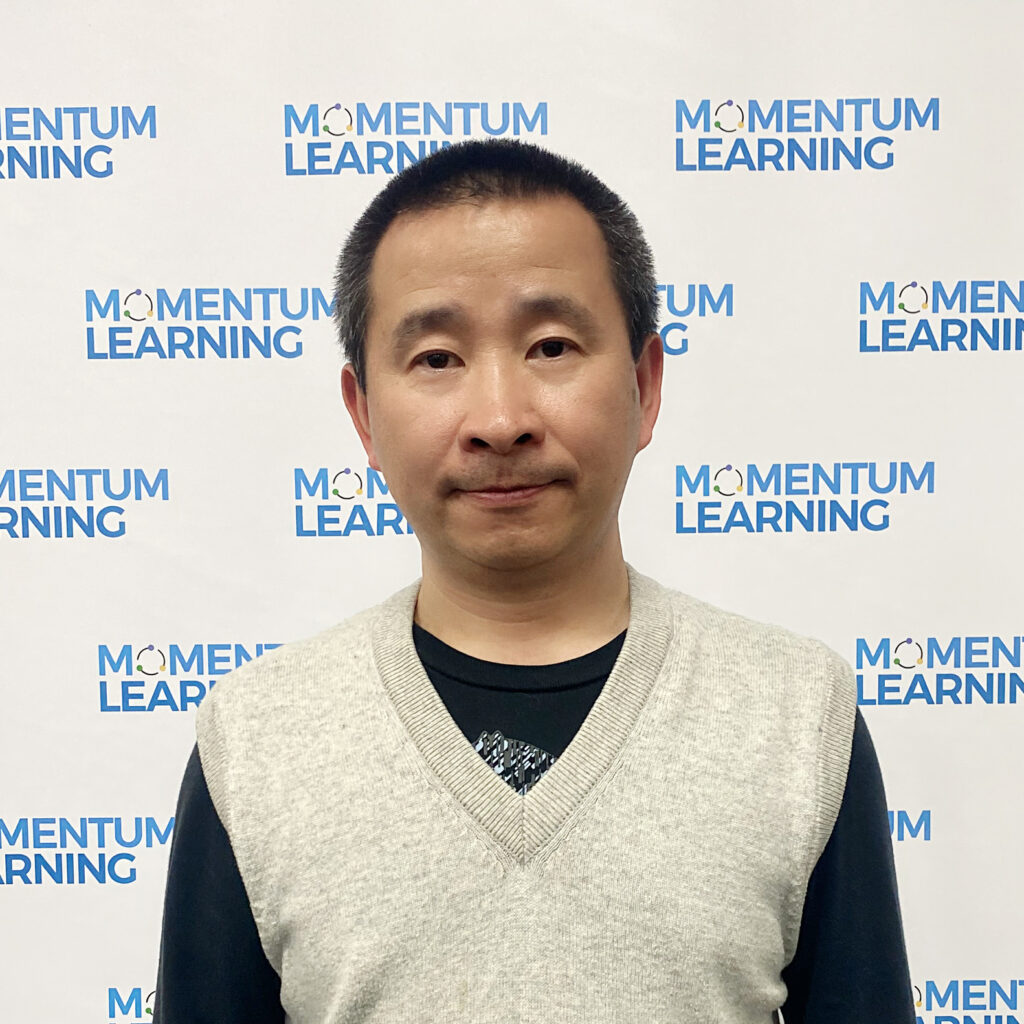 Ming Zhang, Ph.D.
Dr. Ming Zhang received an undergraduate degree in math from University of Science and Technology of China and obtained his Ph.D. from Rice University in Computer Science.
He has worked as an assistant professor at M.D. Anderson Cancer Center and a financial advisor at Morgan Stanley. With over 25 years of algorithm development and investment experience, Dr. Zhang now enjoys teaching students in mathematics and computer science.
In last 3 years, more than 50 of his students have been promoted to USACO Gold and Platinum (including the USACO Training Camp). Many of them are currently attending colleges such as Caltech, MIT, Harvard, Stanford, and Princeton. Congratulations to these amazing accomplishments.
Exam Format
The AP Computer Science A Exam has consistent question types, weighting, and scoring guidelines every year, so you and your students know what to expect on exam day.
Section I: Multiple Choice
40 Questions | 1 Hour 30 Minutes | 50% of Exam Score
- The multiple-choice section includes mostly individual questions, occasionally with 1–2 sets of questions (2 questions per set).
- Computational Thinking Practices 1, 2, 4, and 5 are all assessed in the multiple-choice section.
Section II: Free Response
4 Questions | 1 Hour 30 Minutes | 50% of Exam Score
All free-response questions assess Computational Thinking Practice 3: Code Implementation, with the following focus:
- Question 1: Methods and Control Structures—Students will be asked to write program code to create objects of a class and call methods, and satisfy method specifications using expressions, conditional statements, and iterative statements.
- Question 2: Classes—Students will be asked to write program code to define a new type by creating a class and satisfy method specifications using expressions, conditional statements, and iterative statements.
- Question 3: Array/ArrayList—Students will be asked to write program code to satisfy method specifications using expressions, conditional statements, and iterative statements and create, traverse, and manipulate elements in 1D array or ArrayList objects.
- Question 4: 2D Array—Students will be asked to write program code to satisfy method specifications using expressions, conditional statements, and iterative statements and create, traverse, and manipulate elements in 2D array objects.
AP Computer Science A Topics
Unit 1: Primitive Types
You’ll learn the fundamentals of Java, a programming language, as well as other foundational concepts for coding.
Unit 2: Using Objects
You’ll explore reference data as a way to represent real-world objects in a digital world and discover methods to perform more complex operations.
Unit 3: Boolean Expressions and if Statements
You’ll delve into the building blocks of algorithms and focus on using conditional statements to solve problems and control results.
Unit 4: Iteration
You’ll learn about iteration, another building block of algorithms that are for repetition.
Unit 5: Writing Classes
You’ll explore how real-world interactions can be expressed digitally by organizing behaviors and attributes into classes, and you’ll examine the legal and ethical implications of computer programming.
Unit 6: Array
You’ll learn techniques and standard algorithms to work with collections of related data, known as data structures.
Unit 7: ArrayList
You’ll delve deeper into data sets, exploring ArrayList objects for larger amounts of data, as well as the privacy concerns related to personal data storage.
Unit 8: 2D Array
Now that you’ve explored 1D arrays, you’ll branch out into 2D arrays and experiment with data sets represented in a table.
Unit 9: Inheritance
You’ll learn how to manipulate programming without altering existing code by using subclasses to create a hierarchy.
Unit 10: Recursion
You’ll work on solving larger problems by solving smaller, simpler versions of the same problem using recursive methods.